
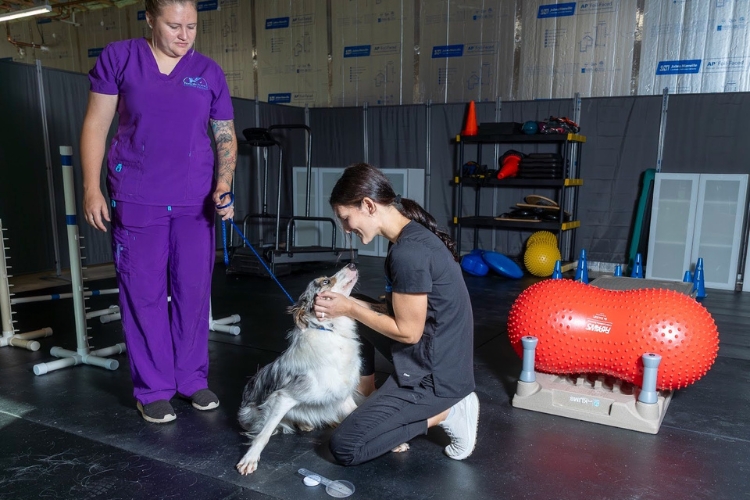
At TotalFit Animal Rehab and Sports Medicine, our mission is simple: to help pets with arthritis, injury, and chronic pain move better and live more comfortably. We believe the best outcomes happen when care is a team effort, which is why we involve pet owners from the very beginning—teaching exercises, demonstrating techniques, and empowering you to play an active role in your pet’s recovery. In addition to hands-on rehabilitation, we are equipped to diagnose complex orthopedic conditions and develop individualized, multimodal pain management plans that support long-term mobility, function, and quality of life.
When your pet undergoes surgery, an injury, or a chronic condition, the road to recovery is vital. Just as humans benefit from rehabilitation to regain strength and mobility, pets also require structured rehabilitation to heal effectively.
For pet owners in the greater Charlotte, NC area looking to support their pets through recovery or manage long-term conditions such as arthritis or neurologic issues, comprehensive rehabilitation services are a game-changer. This blog is especially for you and will guide you through the range of rehabilitation services available and explain why they are an essential part of a pet’s healing process. Read on to discover how these services can boost a pet’s recovery and help them get back to enjoying life.
Why Rehabilitation is Crucial for Pet Recovery
Pets, like humans, need rehabilitation after surgery, injury, or in the face of chronic pain. Without proper rehabilitation, pets can face slower recovery, loss of muscle mass, and ongoing discomfort. Veterinary rehab helps prevent complications, reduce pain, and speed up the healing process.
Whether improving mobility after surgery or providing relief for chronic conditions like arthritis, rehabilitation is key in helping pets return to their normal, happy selves. Rehabilitation services are designed to meet the needs of pets recovering from surgery or dealing with chronic conditions. A personalized rehab plan can ensure pets get the care they need for a faster, more comfortable recovery.
Personalized Rehabilitation: No One-Size-Fits-All Approach
Rehabilitation isn’t a one-size-fits-all process—every pet is unique, with different injuries, surgical histories, ages, and overall health considerations. What works for one dog or cat may not be appropriate for another, even with the same condition. That’s why we tailor every rehab program to the individual, carefully assessing mobility, strength, pain levels, and specific functional goals. We select exercises, modalities, and activity plans based on each pet’s needs, adjusting as they progress or as new challenges arise. By creating a customized plan, we ensure the safest, most effective path to recovery, helping every pet regain mobility, reduce pain, and improve quality of life in a way that works specifically for them.
Types of Comprehensive Rehabilitation Services for Your Pet’s Recovery
Therapeutic Exercise: Strengthening and Improving Mobility
Therapeutic exercise is a cornerstone of rehabilitation, aimed at improving strength, joint stability, and overall mobility in pets recovering from injury, surgery, or managing chronic conditions like arthritis. Targeted exercises help rebuild muscle mass, support weakened joints, and restore proper movement patterns, reducing strain on bones and ligaments. In addition to strengthening, exercises focus on improving flexibility, range of motion, balance, and coordination, which are critical for safe, functional movement. By combining in-clinic sessions with guided at-home exercises, we empower owners to actively participate in their pet’s recovery, ensuring consistent progress and helping pets maintain comfort, confidence, and independence in their daily lives. Some benefits include:
- Improved muscle strength
- Enhanced coordination and balance
- Increased range of motion
Therapeutic exercises are tailored to meet each pet’s specific recovery needs.
Home Exercise Plans: Continuing Recovery at Home
Recovery doesn’t stop when your pet leaves our clinic. At TotalFit, we create personalized home exercise plans that help maintain progress, strengthen muscles, improve mobility, and support joint health between visits. These plans are tailored to your pet’s specific needs and abilities, so exercises are safe, effective, and achievable at home.
To make it even easier for pet owners, we use Canine Exercise Solutions, a user-friendly platform that provides step-by-step instructions, videos, and progress tracking. This ensures you know exactly how to perform each exercise correctly, monitor your pet’s improvements, and stay engaged in their recovery. By combining in-clinic therapy with guided home exercises, we empower you to be an active partner in your pet’s rehabilitation and help them regain strength, comfort, and confidence faster.
Therapeutic Massage: Relieving Muscle Tension and Stress
Therapeutic massage from a veterinarian is beneficial for pets with muscle stiffness, pain, or discomfort. By gently working on the muscles and joints, massage therapy helps:
- Relieve tension and stiffness
- Improve circulation and flexibility
- Aid in pain management
Massage therapy also helps pets relax, easing stress during their recovery process.
PEMF (Pulsed Electromagnetic Field Therapy): Accelerating Cellular Healing
At TotalFit, we use PEMF (Pulsed Electromagnetic Field) therapy to help pets reduce pain, support tissue healing, and improve circulation. PEMF works by delivering gentle electromagnetic pulses that stimulate cells, increase oxygen and nutrient delivery, and promote natural repair processes in muscles, joints, and other tissues.
We feature top-of-the-line Assisi PEMF technology, including both mats and wearable loops. The Assisi Mat allows pets to relax comfortably while receiving full-body therapy, making it ideal for arthritis, post-surgical recovery, or general pain management. The Assisi Loops provide targeted treatment to specific areas, such as a joint or tendon, for more focused healing. Both are non-invasive, drug-free options that complement our rehabilitation programs, helping pets feel more comfortable and move more freely during recovery.
TENS (Transcutaneous Electrical Nerve Stimulation): Pain Relief Without Medication
TENS therapy uses mild electrical impulses to help reduce pain and discomfort. It’s commonly used for pets suffering from musculoskeletal pain, arthritis, and those recovering from surgery. TENS works by:
- Blocking pain signals
- Improving blood flow
- Reducing muscle spasms
TENS is an excellent, non-medication-based method of managing pain during recovery.
Laser Therapy: Non-Invasive Healing with Light
At TotalFit, we use a Class IV therapeutic laser, which is the most powerful category of therapeutic laser available in veterinary medicine. Unlike lower‑power “cold” lasers, a Class IV laser delivers higher energy that penetrates more deeply into tissues, allowing us to reach muscles, joints, tendons, and deeper structures that other lasers may not effectively treat. This deeper photobiomodulation can stimulate cellular activity, increase circulation, reduce inflammation, and support tissue repair at a level that can enhance comfort and recovery when used correctly by trained professionals.
A recent preliminary study in dogs showed that Class IV laser therapy applied to surgical sites accelerated wound healing, with reduced swelling, faster hematoma resolution, improved skin elasticity, and better overall tissue recovery compared with untreated areas, suggesting enhanced inflammation control and vascularization during the healing process.
Research in canine joint disease supports clinical benefits of photobiomodulation (laser therapy), too—one randomized, placebo‑controlled trial in dogs with elbow osteoarthritis found that dogs treated with therapeutic laser had significant reductions in pain and lameness scores and were able to decrease their NSAID use compared with the sham‑treated group.
While the broader veterinary literature on laser therapy varies in quality, these controlled studies suggest meaningful effects when properly dosed and applied by trained professionals, especially as part of a comprehensive rehab and pain management plan.
Acupuncture: Holistic Healing for Pets
Acupuncture is a time-tested therapy that helps reduce pain, inflammation, and stress. By targeting specific points on the body, acupuncture stimulates natural healing processes. It is especially effective for pets recovering from surgery, dealing with arthritis, or suffering from muscle stiffness. Acupuncture helps:
- Relieve chronic pain
- Speed up recovery after surgery
- Promote relaxation
For pets with severe pain or discomfort, acupuncture is a non-invasive way to improve quality of life and support healing.
Pain Management: Keeping Pets Comfortable
Effective pain management is a critical part of rehabilitation, and at TotalFit, we take a multimodal approach to keep pets comfortable while promoting healing and mobility. Rather than relying on a single therapy, we combine multiple strategies tailored to each pet’s needs, including medications, supplements, injections, targeted therapeutic modalities such as laser therapy or PEMF, manual therapies like massage and joint mobilization, and specialized exercises to support strength and movement. This approach addresses pain from multiple angles—reducing inflammation, protecting joints, and improving muscle support—while minimizing side effects and optimizing function. By integrating pain management into every stage of rehab, we help pets recover more quickly, move more comfortably, and enjoy a higher quality of life.
Post-Op Recovery: Smooth Healing after Surgery
Following orthopedic or neurologic surgery—such as Hemilaminectomy (back surgery), TPLO knee surgery, hip procedures, and other orthopedic repairs—structured rehabilitation is a critical part of recovery. Our post-operative care focuses on guiding the body to heal in the right way. Without appropriate intervention, patients are at risk for dysregulated healing, including excessive fibrosis, reduced joint mobility, muscle atrophy, and compensatory movement patterns that can delay or limit full recovery. That’s why we emphasize early rehabilitation, ideally beginning within the first two weeks after surgery (when appropriate and in coordination with the surgeon).
Our approach includes targeted pain management, gentle range-of-motion exercises, controlled weight-bearing progression, neuromuscular re-education, and gradual strengthening. For neurologic cases like IVDD, we also incorporate techniques to support nerve recovery, coordination, and functional mobility. Just as importantly, we work closely with owners—teaching safe at-home exercises and activity modifications—so progress continues between visits. The goal is not just healing, but restoring optimal function, preventing long-term complications, and getting each pet back to a comfortable, active life.
By focusing on post-op care, pets can heal faster, reducing the risk of complications and returning to full health more quickly.
Senior/Arthritis Patients: Managing Pain and Enhancing Comfort
Rehabilitation is incredibly important for senior pets because aging naturally leads to muscle loss, joint stiffness, decreased balance, and a higher risk of arthritis and injury. Without support, these changes can create a cycle of pain, reduced activity, and further weakness that impacts overall mobility and quality of life. Rehab helps interrupt that cycle by maintaining muscle strength, improving joint range of motion, enhancing balance and coordination, and providing effective chronic pain management. Through a combination of targeted exercises, hands-on therapies, and modalities like laser or PEMF, we help senior pets stay comfortable and active. We also guide owners on simple at-home exercises and environmental modifications, so their pets can remain mobile, independent, and enjoy a better quality of life as they age. Rehabilitation therapies can significantly enhance comfort and mobility. Key benefits include:
- Relieving pain and inflammation through pharmaceuticals, exercise, and laser therapy. This takes a multi-modal approach to pain.
- Improving joint mobility with targeted therapeutic exercises designed to restore flexibility and strength.
- Enhancing overall quality of life by reducing discomfort and promoting active living.
Weight Management: Reducing Stress on Joints
Maintaining a healthy weight is essential for pets, especially those with arthritis or joint problems. By managing weight, pets experience less strain on their joints, which can improve their overall mobility. Key aspects of weight management include:
- Reducing joint stress by maintaining an optimal body weight to protect against further joint degeneration.
- Tailored nutrition plans designed to help pets achieve a healthy weight.
- Exercise routines customized to keep pets active without overloading their joints.
Weight management is a crucial aspect of arthritis care, helping pets maintain a healthy weight and enjoy greater comfort and mobility.
Orthopedic Brace Fittings
In certain situations, we may incorporate an orthotic brace into a pet’s rehab plan to provide additional joint support. Unlike soft wraps, these braces are more structured and are used when a joint needs extra stability or when we need to control excessive or abnormal movement. They can be useful for injuries involving the carpus, Achilles tendon, or in select cases of CCL injury—though bracing is usually not our primary treatment choice for CCL tears.
Fit and function are extremely important, which is why we avoid generic braces. Instead, we collaborate with professionals who design custom orthotics specific to each pet’s needs. Even then, these devices aren’t “set it and forget it”—they require ongoing monitoring, as irritation or pressure sores can develop, and periodic adjustments are often necessary to keep the pet comfortable and ensure the brace is doing its job effectively.
Neurologic Conditions: Specialized Rehabilitation for Complex Cases
Neurologic rehabilitation plays a vital role in helping pets recover from conditions that affect the brain, spinal cord, or nerves, such as IVDD, fibrocartilaginous embolism (FCE), and vestibular disease. These patients may experience weakness, incoordination, balance issues, or even paralysis, and require a specialized approach focused on retraining the nervous system. Our goal is to promote neuroplasticity—the body’s ability to form new neural connections—through targeted exercises that improve strength, coordination, balance, and functional mobility. This may include assisted standing and walking, proprioceptive training, balance work for vestibular patients, and therapeutic modalities to support nerve healing and reduce discomfort. Just as with orthopedic rehab, owner involvement is key, and we provide guidance on safe, effective exercises to continue progress at home. With consistency and a tailored plan, many neurologic patients can regain meaningful function and improve their overall quality of life.
How Rehabilitation Can Enhance Your Pet’s Health and Well-Being
Rehabilitation offers multiple advantages for pets:
- Improves Mobility and Flexibility – Helps pets move more comfortably, whether recovering from surgery, injury, or age-related stiffness.
- Reduces Pain and Discomfort – Techniques like massage, laser therapy, and therapeutic exercises can relieve joint and muscle pain.
- Strengthens Muscles and Joints – Targeted exercises build strength to support overall skeletal health.
- Speeds Recovery – Rehab accelerates healing after surgery or injury, helping pets return to normal activity faster.
- Enhances Balance and Coordination – Especially important for senior pets or those with neurological conditions.
- Promotes Weight Management – Safe activity programs help maintain a healthy weight and reduce strain on joints.
- Prevents Future Injuries – Strengthening and conditioning can lower the risk of re-injury or new musculoskeletal issues.
- Supports Mental Well-Being – Engaging exercises and interaction during rehab improve confidence and reduce stress.
- Improves Quality of Life – Overall, rehabilitation helps pets live more active, comfortable, and happy lives.
Securing a Healthier Future Through Pet Rehabilitation
Rehabilitation is a vital part of any pet’s recovery process. Whether your pet is recovering from surgery, managing chronic conditions, or healing from an injury, TotalFit’s comprehensive rehabilitation services can provide the support they need to heal, stay comfortable, and regain their normal activities. By offering personalized care through exercise, laser therapy, massage, and more, rehabilitation helps pets regain function and quality of life.
If you’re in Mooresville, Davidson, Huntersville, Troutman, or the Charlotte area and your pet needs rehabilitation care, book an appointment with TotalFit. The team offers comprehensive rehabilitation services to support your pet’s recovery at every step and will help you explore how rehabilitation can benefit your pet.
FAQs
Q1. How soon after surgery can my pet begin rehabilitation?
Ans. Rehabilitation typically begins a few days after surgery, once the initial recovery phase is complete. Always consult your veterinarian for specific guidance.
Q2. Can rehabilitation help pets with arthritis?
Ans. Yes, rehabilitation services like exercise, massage, and laser therapy are highly beneficial for pets with arthritis, helping reduce pain and improve mobility.
Q3. What is acupuncture used for in pet rehabilitation?
Ans. Acupuncture helps to reduce inflammation, alleviate pain, and promote healing, making it effective for pets recovering from surgery or managing chronic conditions such as arthritis.
Q4. Is rehabilitation suitable for senior pets?
Ans. Yes, rehabilitation is especially beneficial for senior pets, helping them manage pain, maintain mobility, and improve overall quality of life. Low-impact controlled exercise is the best.
Q5. How long will my pet need rehabilitation?
Ans. The duration of rehabilitation depends on your pet’s condition and recovery progress. Some pets may need only a few weeks, while others may benefit from ongoing support.
Q6. Can rehabilitation help pets with neurological conditions?
Ans. Yes, specialized rehabilitation therapies can help pets with neurological conditions recover muscle strength, coordination, and function, improving their overall quality of life.