Now offering appointments as early as 8 AM, Monday through Friday!


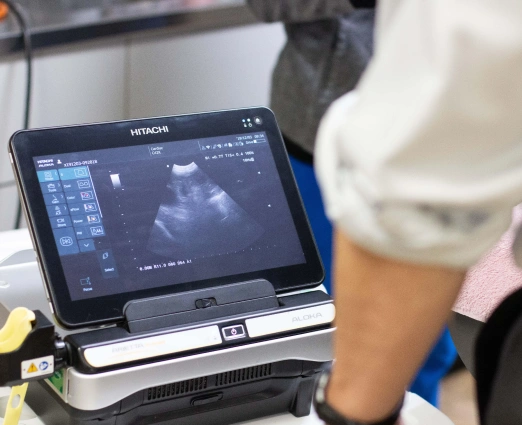
Importance of Ultrasound for Your Pet’s Health
At TotalBond Veterinary Hospital at Forestbrook, the team uses the latest ultrasound technology to get a comprehensive look at your pet’s internal health. Ultrasound is a highly effective non-invasive diagnostic tool that helps veterinarians see what’s happening inside your pet’s body and make well-informed decisions about care, whether monitoring an ongoing condition or investigating symptoms.
Why Ultrasound Can Be Important for Your Pet
Ultrasound allows veterinarians to view your pet’s internal organs in real time. It creates live images of structures like the heart, lungs, abdomen, and other vital systems. Unlike Xrays, it shows the interior of these organs and can illuminate features not otherwise visible.
How Ultrasound Works
An ultrasound sends high-frequency sound waves into your pet’s body that bounce back to create detailed images of internal structures:
- A special gel is applied to the area being examined to help contact between skin and the ultrasound probe.
- The probe sends sound waves through the body, and the returning signals form the image.
- The procedure is quick, painless, and safe for pets.
What to Expect From Ultrasound Procedure
We understand that pet owners may feel unsure about what to expect during an ultrasound. Rest assured, the process is straightforward and comfortable for your pet. Here's what happens:
- Non-Invasive and Painless: No cuts or needles are involved.
- Gel Application: A cool gel helps the probe glide over the area.
- Real-Time Imaging: The probe provides live views of internal organs. These are captured in video clips and often sent to a specialist to overview and send a report (usually within 1-2 days).
- Quick and Efficient: Most ultrasounds are finished in under an hour.
- Comfort First: Some ultrasounds are screening “FAST” scans that take only a few moments, and often do not require sedation, although if a pet is anxious, staff work closely with the owner to ensure comfort and may discuss mild sedation if needed. More comprehensive ultrasound procedures take 30-45 minutes and sedation is usually advised for these so that your pet remains comfortable and restful.
Early Detection and Accurate Diagnosis
Using ultrasound, the hospital can detect conditions such as organ abnormalities, heart issues, and tumors early on. Monitoring functions such as heart rate and organ size helps make more precise diagnoses and catch problems sooner, potentially reducing the need for more invasive treatments later.
