

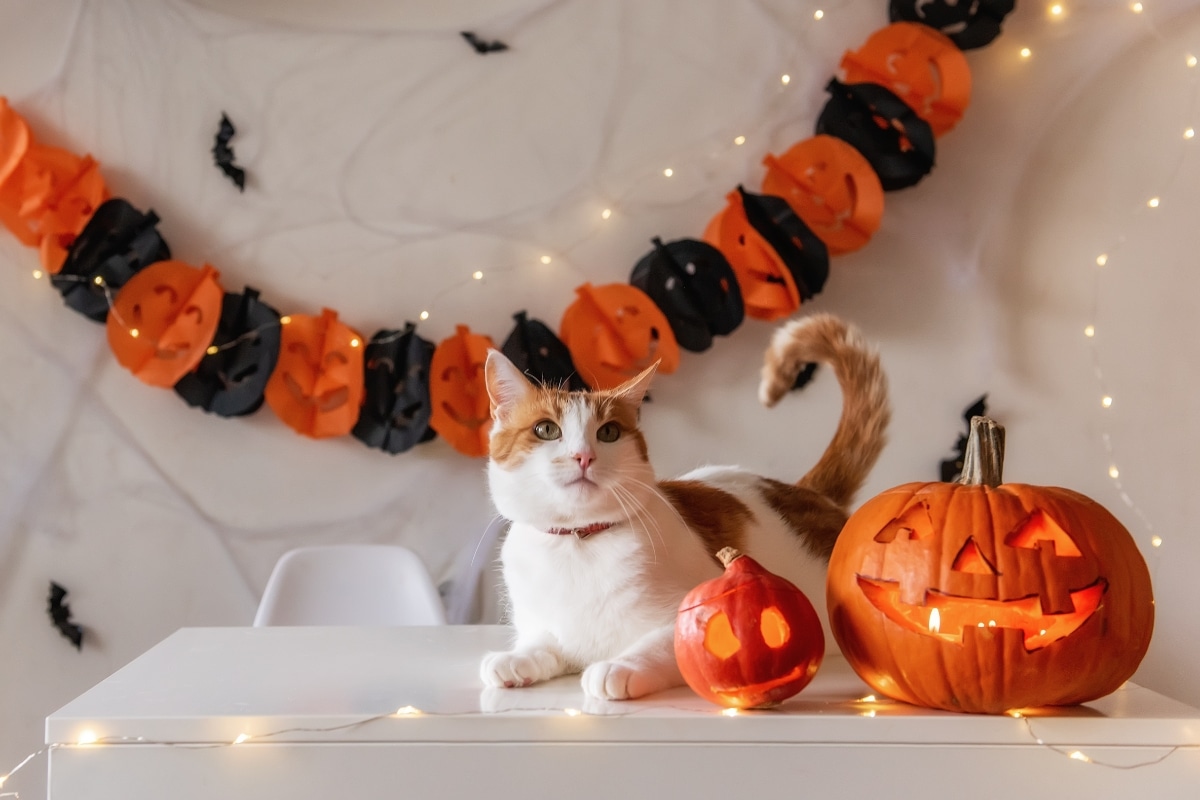
Halloween evening can make a familiar Lake Wylie home feel completely different to an indoor cat. Doorbells ring repeatedly, costumed visitors appear outside, children call from the porch, and family members move through the house more often than usual.
For cats that depend on a predictable indoor environment, these sudden changes can be stressful. Even a normally calm cat may hide, become unusually alert, avoid food, or try to escape when Halloween activity disrupts its sense of security.
Why Do Halloween Visitors Stress Indoor Cats?
Cats often feel safest when their surroundings are familiar and predictable. Their home is their territory, and they rely heavily on familiar scents, sounds, resting areas, and routines.
Halloween can change several of those things at once. Frequent visitors introduce unfamiliar voices and smells. Costumes alter people’s normal appearance. The front door opens repeatedly. Decorations may move, flash, or make noise.
A cat may interpret these changes as possible threats rather than harmless Halloween fun. Veterinary feline guidance recognizes unfamiliar people, smells, sounds, and changes within a cat’s territory as potential sources of fear and stress.
What Makes Trick-or-Treaters Particularly Stressful for Cats?
Repeated Doorbells and Knocking
A single doorbell may startle a cat. On Halloween, that sound may occur repeatedly for several hours.
Knocking, excited children, conversations on the porch, and doors opening and closing can prevent a nervous cat from settling after each disturbance.
Costumes Can Make People Look Unfamiliar
Masks, hats, capes, large decorations, and unusual silhouettes can make familiar or unfamiliar people appear different. Cats cannot understand that someone dressed as a Halloween character poses no threat.
Some cats may retreat immediately. Others may freeze, watch from a distance, hiss, or attempt to flee when approached.
New Smells Enter the Cat’s Territory
Scent is an important part of how cats evaluate their surroundings. Visitors can bring unfamiliar perfumes, clothing odors, outdoor smells, and even scents from other animals.
Cats use their own scent markings to feel familiar with their environment. A sudden collection of unfamiliar odors may contribute to their discomfort.
Their Normal Routine Changes
Indoor cats may have predictable times for meals, play, rest, and interaction. Halloween parties and trick-or-treating can interrupt those routines.
Their usual sleeping area might suddenly become busy. Food, water, or the litter box may also feel difficult to approach if visitors are nearby.
How Can You Tell If Your Indoor Cat Is Stressed?
Feline stress is not always dramatic. Some cats simply disappear under a bed until visitors leave.
Possible signs include:
- Hiding or avoiding people
- Dilated pupils
- Crouching or freezing
- Flattened or backward-facing ears
- Tail twitching or a puffed tail
- Hissing, growling, or swatting
- Increased vocalization
- Reduced interest in food
- Urinating or defecating outside the litter box
- Repeated attempts to escape
These behaviors can occur with fear or stress, but some can also accompany pain or illness. A persistent behavioral change should not automatically be blamed on Halloween.
How Can You Make Halloween Less Stressful for an Indoor Cat?
Prepare a quiet room before trick-or-treating begins. Include familiar bedding, water, food (when appropriate), a litter box, toys, scratching options, and a place your cat can hide or perch.
When possible, keep the room away from the main entrance. Closing curtains and using familiar background sound may also reduce exposure to activity outside.
Most importantly, allow your cat to retreat. Do not carry a frightened cat into a gathering or ask visitors to approach a cat that is hiding. Cats generally cope better when they have control over whether they interact.
If your cat repeatedly struggles with visitors or environmental changes, contact our animal hospital now to discuss whether further evaluation is appropriate. Do not give human medications, supplements, or another pet’s prescription to calm your cat without veterinary guidance.
When Does Halloween Stress Need Veterinary Attention?
Brief hiding during a busy evening may resolve once the home becomes quiet. However, schedule an examination if behavioral changes continue, your cat stops eating normally, repeatedly eliminates outside the litter box, or seems unable to return to its normal routine.
Seek prompt veterinary attention for concerning symptoms such as breathing difficulty, collapse, repeated vomiting, suspected toxin ingestion, injury, or severe weakness. These signs may have causes unrelated to stress and should not simply be monitored as Halloween anxiety.
Help Your Cat Feel Secure Beyond Halloween
Halloween can reveal how strongly an indoor cat reacts to unfamiliar people, noises, and disruptions. Recognizing those responses can help Lake Wylie pet owners prepare a calmer environment for future visitors and celebrations.
If your cat remains unusually fearful, stops eating or using the litter box as usual, or shows recurring stress around visitors, TotalBond Veterinary Hospital at Bethel can provide veterinary care and help determine whether medical or behavioral factors may be involved. Call our hospital at 803-831-1318 to schedule a consultation.
FAQs
Q1. How long does it take a cat to calm down after Halloween visitors leave?
Ans. Some cats return to normal shortly after the house becomes quiet, while others need more time. If hiding, appetite changes, litter box problems, or unusual behavior persist, TotalBond Veterinary Hospital at Bethel can evaluate whether another issue may be contributing.
Q2. Should I put my cat in a separate room during trick-or-treating?
Ans. For a cat that becomes frightened by visitors, a secure room can reduce exposure to doorbells, strangers, and a frequently opened front door. Provide water, a litter box, familiar bedding, hiding space, and other familiar resources.
Q3. Why does my cat hide whenever Halloween visitors arrive?
Ans. Hiding is a common protective response when a cat perceives unfamiliar people, sounds, scents, or activity as threatening. Do not force the cat out. If the behavior becomes persistent or is accompanied by other concerning changes, TotalBond Veterinary Hospital at Bethel can assess possible contributing factors.
Q4. Can Halloween stress cause my cat to stop eating?
Ans. Stress may temporarily reduce a cat’s interest in food, but appetite loss can also indicate a medical problem. Cats that aren’t eating normally shouldn’t automatically be assumed to be anxious. Contact a veterinarian for guidance, particularly if the change persists or other symptoms develop.
Q5. Are kittens or older cats more likely to become stressed by Halloween visitors?
Ans. A cat’s response depends on temperament, socialization, health, previous experiences, and environment, not age alone. Kittens encountering unfamiliar activity and older cats dealing with health or sensory changes may require additional consideration.
Q6. When should I take my stressed cat to a veterinarian?
Ans. Arrange an examination when stress-related behavior persists, repeatedly interferes with eating or litter box habits, or represents a significant change from normal behavior. TotalBond Veterinary Hospital at Bethel can help determine whether behavioral stress, pain, illness, or another factor needs attention.
